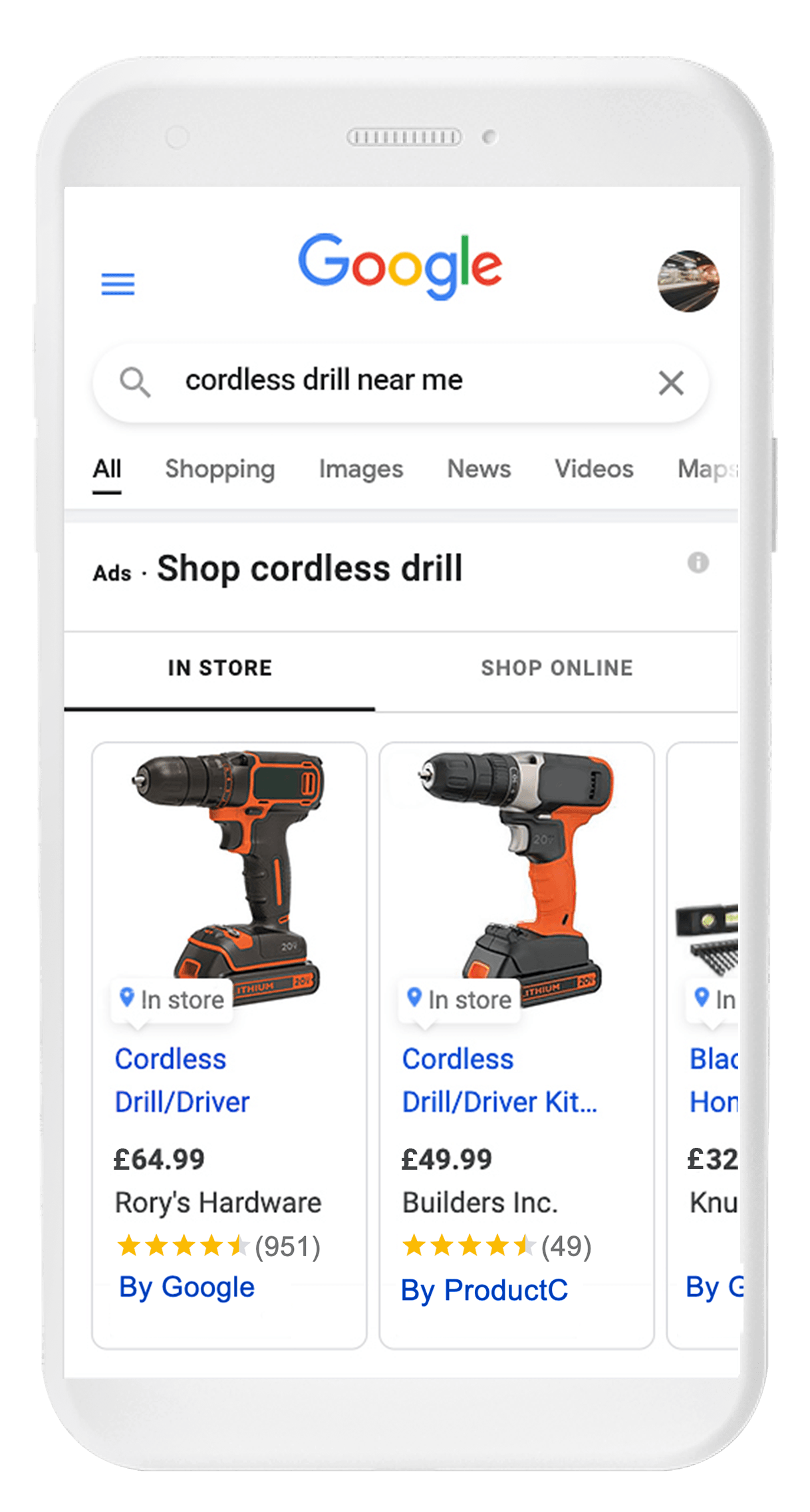
Google Local Inventory Ads (or LIA for short) are a subtype of Google Shopping Ads that let retailers promote their in-store products to nearby shoppers throughout the Google ecosystem.
Google LIA are designed specifically to direct online searchers straight to your store’s shelves, typically serving as an extension of your primary Google Ads. Besides bringing in new offline visitors, sellers also use LIA to get more click-and-collect sales.
Google displays LIA based on geolocation, showing your boosted products to people who are physically close to your store or have interest in your geographic area.
Similarly to standard Shopping Ads, Google LIA usually operate on a pay-per-click basis, charging you only when viewers really interact with your ad.
Promoting items with Google LIA is a great marketing strategy for merchants in any e-commerce vertical, especially consumer electronics, furniture, home improvement, pet supplies, fashion, automotive parts, and hobby goods.
Google LIA work best for small, independent brick-and-mortar shops that want to grow within their local community. There are no minimum stock, revenue, or business size requirements to get started with these ads.
Google shows LIA to users who are actually located in the areas you cover. Pair this with Google’s audience segments and the largest shopper base in the world, and your offers will easily find your ideal local customers.
Your LIA can appear alongside regular Shopping Ads on Google Search, Maps, YouTube, and partner sites within the Display Network. These prominent spots will naturally connect you with relevant, shopping-oriented browsers.
Retailers running Google Shopping campaigns with LIA see store visits rise by up to 21%. Such ads are super effective at directing buyers to your physical outlets, driving 3.5x more foot traffic than traditional text ads.
Google LIA organically convert online interest into in-person transactions. 76% of searchers go to a nearby seller within 24 hours after encountering their LIA, and about 28% of these "near me" queries end in a purchase.
Over 70% of consumers often opt for the "buy now, pick up in store" (BOPIS) option, and Google LIA can help you smoothly adapt it. As a result, you can expect a 9% increase in website conversions for pickup-available items.
Google LIA consistently remind people about your conveniently situated store, making you their first choice for future needs. This repeated exposure lets you quickly build trust and long-term loyalty in your neighborhood.
To be eligible for Google Local Inventory Ads (LIA), you must meet the following requirements:
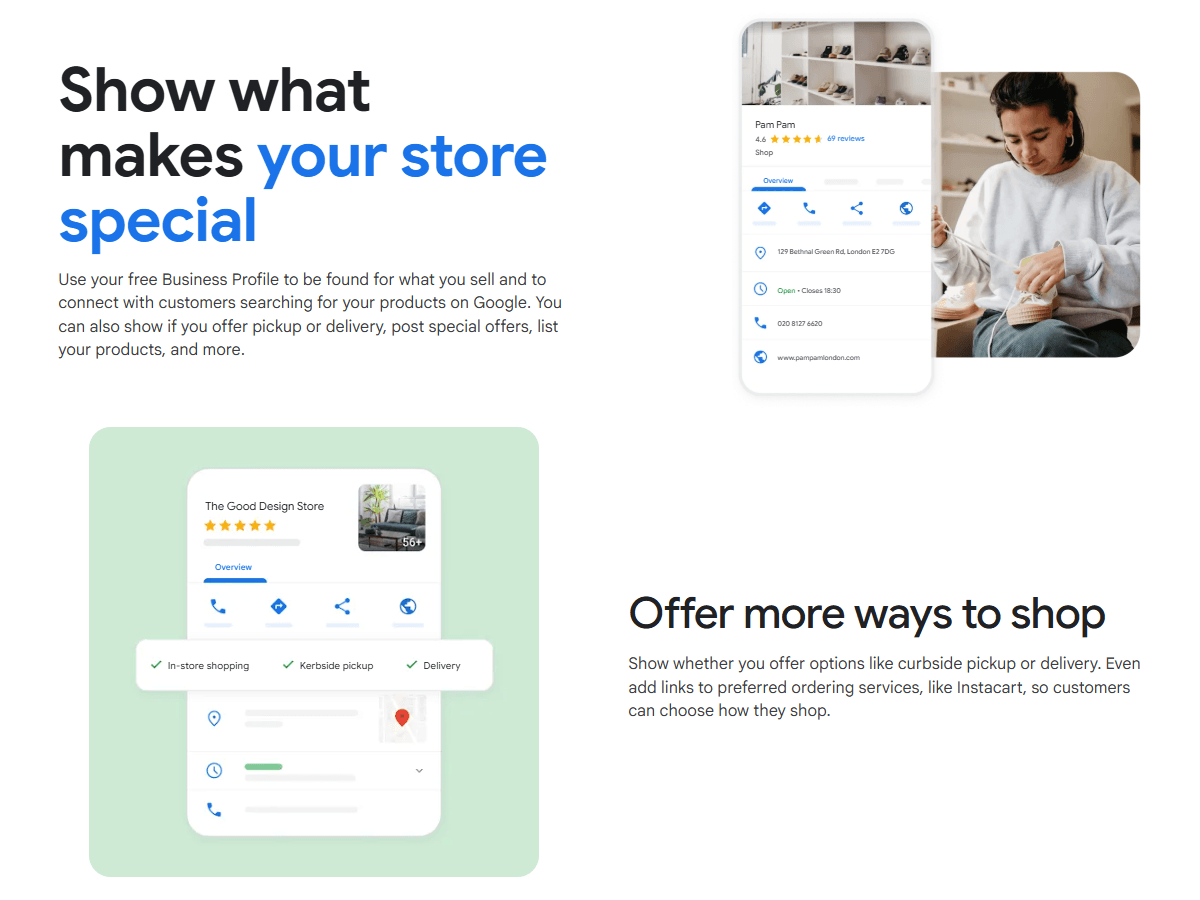
You can quickly get a Business Profile for your offline shop using Google’s instructions. If you have a large chain with multiple physical locations, you should consider consolidating their profiles into one group within the Business Profile Manager.
Merchants upload their items on Google using Google Merchant Center (GMC). This hub is a central storage of product data that Google incorporates into your free and paid listings. Our user manual has an extensive guide on how to link your Shopify store with GMC.
When your GCM account is up, you next need to activate the LIA add-on in GMC and add your shop’s Business Profile to GMC. It’s a crucial step that lets Google understand which product ads to show together with your specific offline shop.
Google LIA require you to provide catalog details using 2 product feeds: a standard feed for Google Shopping and a dedicated Google Local Inventory feed. Google Shopping feed acts as a main product data warehouse, while a supplemental Google Local Inventory feed contains information specifically on in-store item availability.
You can easily create Google Shopping and Google Local Inventory feeds in Mulwi. Plus, our team can do the whole setup for you at no cost.
Mulwi has a pre-built feed template for Google LIA packed with all necessary attributes. You can just specify your store code and use this template as is, because it’s already optimized for best results. If you have several shops, our app can make a Google LIA feed for each one.
Mulwi also comes with a ready-made Google Shopping feed template that’s simple to set up and even simpler to personalize.
Thanks to Mulwi, your offers on Google will always stay synced with your Shopify catalog. After you connect your product feeds to GMC using URL or FTP, our app will take care of refreshing your assets by itself. You won't need to manually update any ad copies yourself.
Retailers place paid advertising on Google through the Google Ads platform. Hence, to run Google LIA for your products, you must link a Google Ads account to your GMC. This lets your Google campaigns integrate data from your feeds in GMC into your ads. You also need to install conversion tracking in your Shopify store so that Google can correctly work with your budget and targeting options.
With all preparations complete, you can now confidently launch your Google Local Inventory Ads campaign. We recommend starting with a regular Shopping campaign for better control. You can then move to Performance Max once the learning stage is over.
Google Local Inventory Ads might seem overwhelming, but you don’t have to figure them out alone. Mulwi’s experts have years of expertise in helping Shopify sellers thrive on Google. Partner with us, and we’ll gladly support you in mastering Google LIA and boosting your sales.